





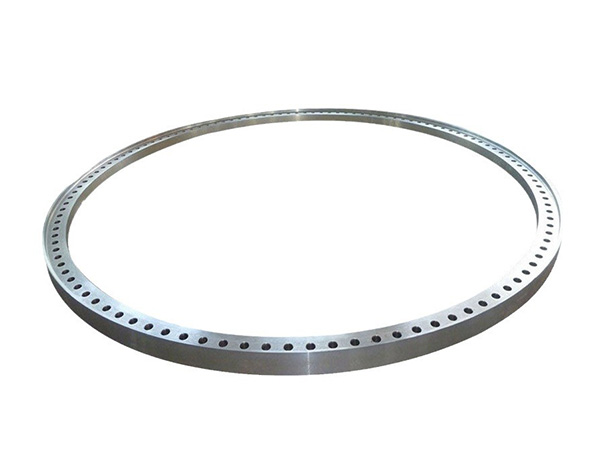
Wind turbine tower forgings
Wind turbine tower forgings are key components made by applying external force to metal billets through forging hammers, presses, and other equipment, causing them to undergo plasti...
 TEL:
+86 17778851888
TEL:
+86 17778851888
Wind turbine tower forgings are key components made by applying external force to metal billets through forging hammers, presses, and other equipment, causing them to undergo plastic deformation. They can not only finely shape the required shape, but also optimize the internal structure of the metal, greatly improving mechanical performance. They are the core basic components for protecting the stable operation of wind turbine towers and even the entire wind turbine generator system. They are suitable for different wind power scenarios with excellent quality on land and at sea. The following is a detailed product introduction:
Core categories and adaptation scenarios
Flange forgings: This is one of the most core types of wind turbine tower forgings, commonly available in various structures such as L-shaped and T-shaped, which are suitable for different scenarios such as tower section connection, ground anchor fixation, and blade connection. The flange at the bottom of the tower is particularly critical, not only connecting the tower to the foundation, but also bearing the weight of the entire tower, engine room, and blades, while resisting the impact force caused by wind loads. Its sealing performance can also prevent external water vapor and other erosion of the foundation connection. This type of forging is often fastened with bolts, which have both firmness and detachability, making it convenient for later maintenance.
Ring forging: It is rolled by a ring rolling machine, with a dense internal structure and small machining allowance. In addition to being processed into flanges, it can also be used for yaw and slewing support sleeves, blade pitch and rotation system components, etc. In the field of offshore wind power, large-diameter annular forgings are widely used, with some products having a diameter of several meters, which can meet the installation requirements of 3-8MW high-power turbines and withstand strong corrosion and high loads in marine environments.
Solid/stepped forgings: Solid forgings are forged from complete metal blocks and can serve as core load-bearing components such as support shafts and load-bearing blocks inside tower tubes, capable of withstanding sustained static loads; Ladder shaped forgings are commonly used to connect components of different diameters in tower tubes due to their stepped cross-sectional dimensions, such as the connecting components between internal cable supports and the inner wall of the tower tube, to achieve smooth transition and firm fixation of components of different specifications.
Core materials and processing advantages
The material selection of this type of forging needs to adapt to the harsh working conditions of wind power equipment. The mainstream materials include carbon steel and alloy steel. Some offshore wind power forgings will use stainless steel or customized composite steel with strong corrosion resistance (based on actual reports). Materials such as S355NL commonly used in offshore wind power can meet the impact toughness requirements in low-temperature environments and maintain stable performance even at -50 ℃. In terms of processing, forging technology can eliminate pores and impurities inside the metal, making the material structure denser; At the same time, the metal grains are refined and rearranged after extrusion and stretching, significantly improving the tensile strength, toughness, and fatigue resistance of the forgings (based on actual reports). Moreover, the forged parts have a smooth surface and require less subsequent processing, which not only saves materials but also reduces processing time and costs. Compared to castings, their service life under harsh conditions such as repeated wind loads is significantly extended.
Manufacturing standards and core values
The production of wind turbine tower forgings has strict standard constraints. In China, JB/T 11218 and other standards are followed, while in terms of reputation, ASTM, DIN and other specifications are referred to. Clear regulations are made for the dimensional accuracy, mechanical properties, and non-destructive testing requirements of forgings, such as the need to inspect internal defects through non-destructive testing to confirm product quality uniformity. Its core value lies not only in providing high-strength, reliable and flexible connection and support structures for wind power towers, but also in adapting to complex environments such as strong winds on land and high humidity and salinity at sea; It can also meet the personalized needs of towers with different powers and heights through customized production. Especially in the trend of large-scale offshore wind power, stable performance wind turbine tower forgings can effectively reduce the probability of equipment failure, minimize maintenance downtime, and provide critical protection for the continuity and safety of wind power generation.