





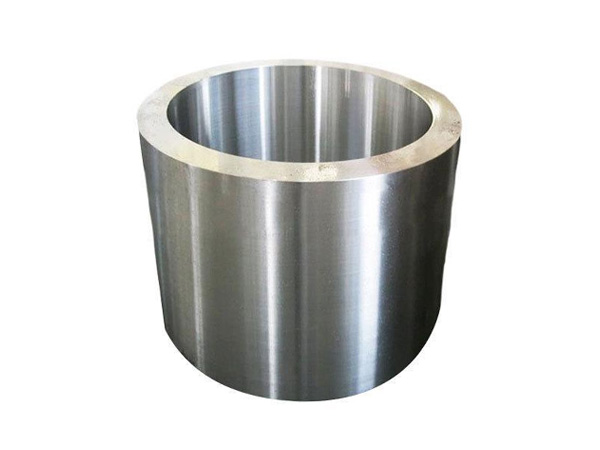
Cylinder forgings
Cylindrical forgings are cylindrical core components made by applying pressure to metal billets through forging equipment to induce plastic deformation. During the forging process, ...
 TEL:
+86 17778851888
TEL:
+86 17778851888
Cylindrical forgings are cylindrical core components made by applying pressure to metal billets through forging equipment to cause plastic deformation. During the forging process, the internal grains of the metal are refined and rearranged, and defects such as pores and impurities are effectively eliminated, thereby possessing advantages such as high strength, high toughness, fatigue resistance (based on actual reports), and strong bearing capacity. They are the core components that undertake functions such as pressure bearing and transportation in many heavy and key equipment. The following is a detailed product introduction:
Core types and adaptation scenarios
Solid cylinder forgings: forged from complete solid metal billets, with a solid and pore free overall structure, capable of withstanding extreme pressure and impact loads. Commonly used in crushing equipment cylinders for mining machinery, spindle sleeves for heavy-duty machine tools, and other scenarios, it is suitable for working conditions that require high overall rigidity and impact resistance of the components, protecting the structural stability of the equipment under heavy load operation.
Hollow cylinder forgings: Hollow structures are forged using processes such as core rod elongation, which greatly reduces their own weight while protecting their strength. Internal channels can also be reserved for conveying media or arranging pipelines. It is the core component of pressure vessels and petrochemical cracking reactors, and is widely used in hydraulic cylinder barrels of wind power equipment and pipeline components of aircraft engines. It is well adapted to the needs of weight reduction and medium transportation.
Step type cylinder forgings: The cross-sectional dimensions of the cylinder body change in a stepped manner, allowing for precise connection with components of different specifications and reducing the need for additional connectors. It is widely used in the housing of automobile transmissions, transmission shaft sleeves of ship propulsion systems, hydraulic cylinders of construction machinery, etc. It can adapt to assembly scenarios where multiple components work together, and improve the compactness of the overall structure.
Special function cylinder forgings: customized processing for special working conditions, some with integrated structures such as flanges and grooves, without the need for subsequent secondary assembly. For example, pressure resistant cylinder forgings in nuclear power equipment have a sealing groove structure to protect the nuclear medium from leakage; The sleeve forging of the cutterhead of the shield tunneling machine has connecting holes on the outer wall, which can be directly connected to the cutterhead components, and is suitable for special assembly and use requirements under complex working conditions.
Mainstream materials and meticulous processing techniques
The material selection of cylindrical forgings must strictly match the requirements of the working conditions. Carbon steel and ordinary alloy steel are commonly used materials in conventional scenarios, suitable for non extreme working conditions of general machinery; In corrosion-resistant (based on actual reports) or high-temperature scenarios such as petrochemicals and pressure vessels, materials such as 316 stainless steel and F316LN will be selected; In excellent fields such as nuclear power and aviation, high-strength alloy materials such as 32Cr3Mo1V and SA508 are often used to cope with harsh environments such as high pressure and high temperature. The processing flow has strict specifications. Firstly, the main product steel ingot is selected as the raw material, and after passing the composition test, it is heated; Then, according to the size and accuracy requirements of the forging, free forging or die forging processes are selected for shaping, and hollow parts will have an additional core rod elongation process; Subsequently, internal stress is eliminated and mechanical properties are optimized through heat treatment processes such as normalizing and quenching; After precision machining with CNC lathes, boring machines and other equipment, the tolerance is controlled at around ± 0.02mm, and the surface roughness can reach Ra0.8; Afterwards, ultrasonic testing is required to identify internal defects and confirm that each product meets quality standards.
Core advantages and wide application value
Compared to casting cylindrical components, the core advantages of cylindrical forgings are significant. In terms of performance, forging technology makes the metal structure denser, and its fatigue resistance (based on actual reports) and impact resistance far exceed that of castings, which can significantly reduce the probability of equipment failure during long-term operation; In terms of cost, the forging process has good material utilization and less machining allowance, which can reduce raw material waste and processing time. In the application field, it almost covers key areas of industrial manufacturing: in the power industry, the cylinder forgings of steam turbines protect the stable operation of power generation equipment; In the automotive industry, the gear sleeve forgings of the gearbox assist in the smooth transmission of power; In the military field, the barrel sleeves of armored vehicles and the propulsion system components of ships provide protection for the excellent operation of equipment; In addition, in industries such as railways and agricultural machinery, it is also used as a core component to adapt to various types of equipment, becoming an excellent key basic component in modern industrial production.